 : For Students, Faculty, and Staff

by Ivy Orlando
UMN Landscape Architecture student and NAA student staff, Ivy Orlando shares their discoveries at the Northwest Architectural Archives.
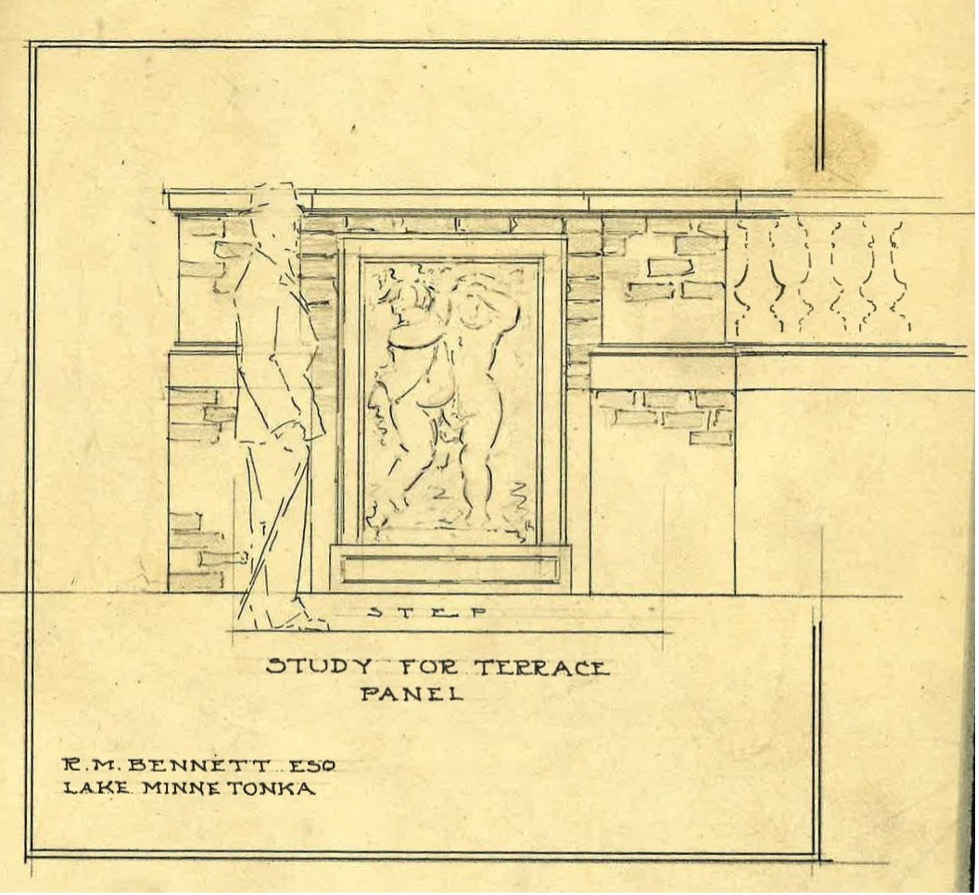
Study for the Terrace Panel, R.M. Bennett
Much of what thrills me about working at the archives are the mysteries found within its caverns, some that are uncovered through the neverending sea of information that the library holds, and some where a gap in that information becomes the mystery itself. Clues are found in every corner of the archives, not just within the vast Sherlock Holmes collections. In the caverns, mysteries are around every corner. The landscape architects Morell and Nichols’ collection is no exception – brewing with mysteries to be solved.
Sometimes you don’t even know you are solving a mystery until the solution appears in front of you. One such case combines the exclusivity of private estates with the opulent wealth of the 1910s – R.M. Bennett, ESQ.
When you have Esquire after your name, the amount of drawings in your folder tends to increase (Bennett has four folders’ worth!). A typical residential garden might have a couple drawings in this collection, not even a full folder. The amount of work done just for the Bennett Estate in 1914 and 1915 is comparable to what I would typically see in a university grounds study or public works project. Morell and Nichols designed custom urns, benches, multiple fountains, tennis courts, terraces, the list goes on and on.
These expansive private residences are so particularly fascinating, in part, because of the exclusivity. Through these drawings, we are able to peek behind the curtain, and see how life looked for the 1910s upper class at Lake Minnetonka, showcasing the wealth and status of the time. The great mystery of history, so to speak, is how previous generations from a variety of backgrounds lived, and in this case, the drawings show how a lifestyle so foreign to my experiences can be so geographically close.
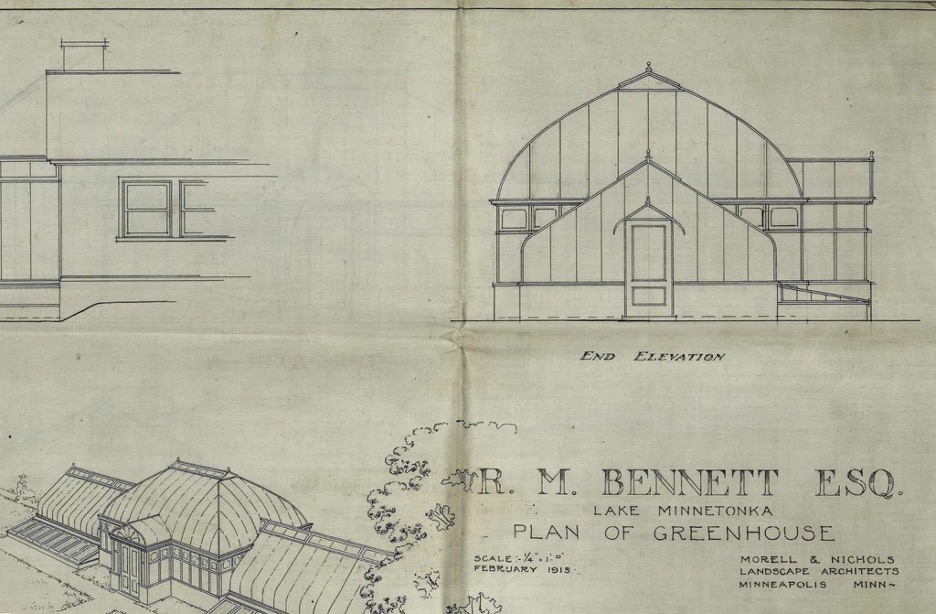
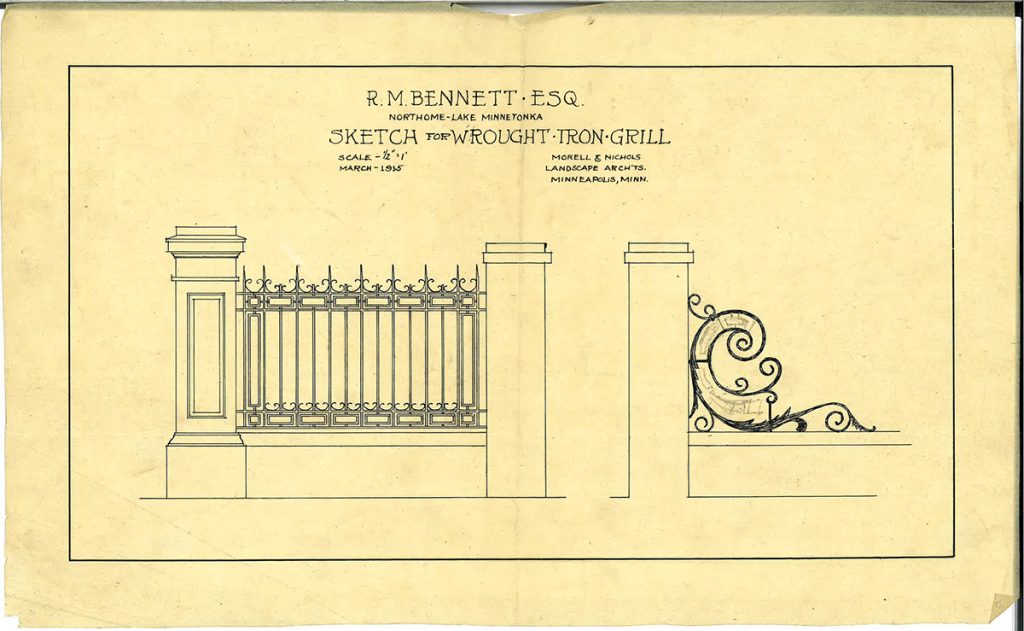
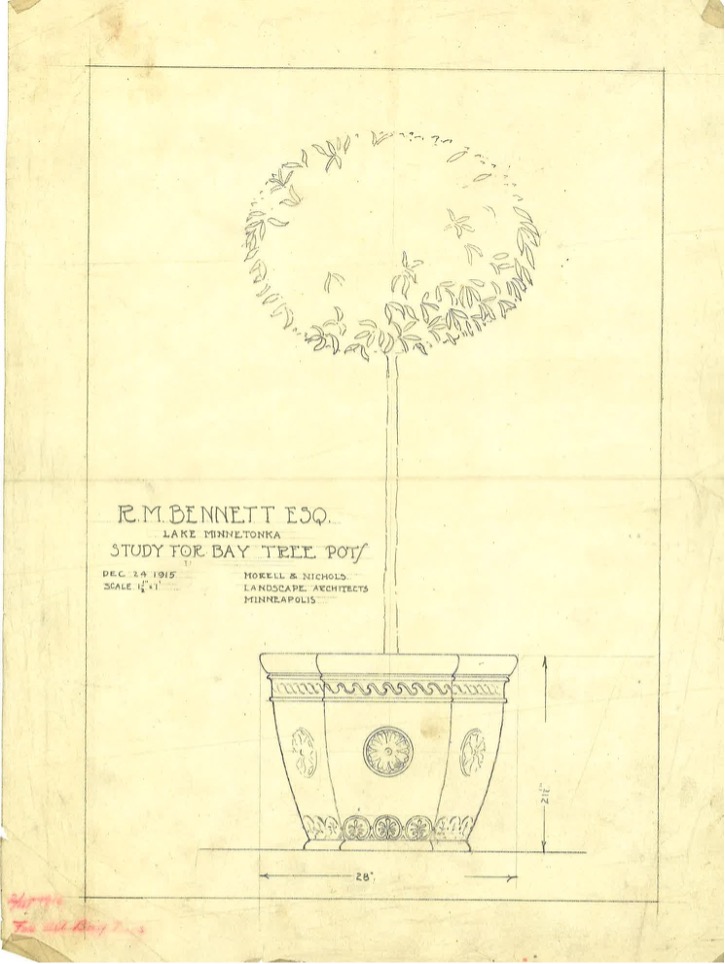
Overlapping NAA Collections
Another mystery was caused by the gaps of information within the folders themselves. Armour Co. was one of five leading firms in the meat packing business throughout the 19th and 20th century. So, imagine my surprise when I open the folders labeled “Armour Co.” and discover not a meat packing facility or warehouse, but instead drawings of Hillside Cemetery and Sunset Memorial Park, located in the St. Anthony area, nowhere near the historic Armour Co. plant in South St. Paul. This prompted further digging.
Most drawings within the 10 folders had no mention of Armour Co., but a couple drawings connected the meat packing plant to the cemeteries. One of these included a mention of an Armour Golf Course, which, upon further research, was renamed in 1947 to the Francis A. Gross Golf Course, and resides next to Sunset Memorial Park.
I soon discovered that Armour Co. not only owned the land for the meat processing plant in South St. Paul, but also 800 acres west of the area. Some of this area, which was originally acquired as a possible site for the plant, became the Sunset Memorial Park, Hillside Cemetery and Francis A. Gross Golf Course that we know today.
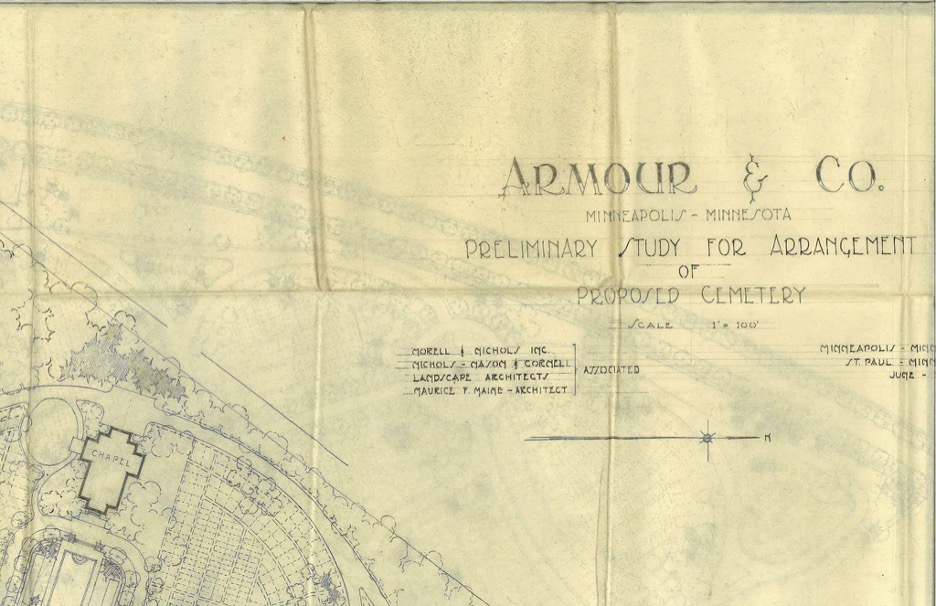
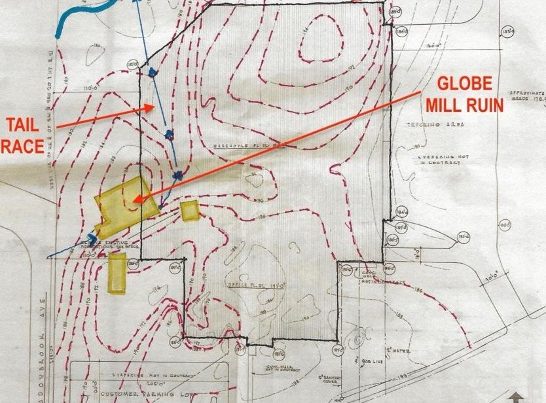
Title Block of the Armour & Co. Preliminary Study for Arrangement of Proposed Cemetery.
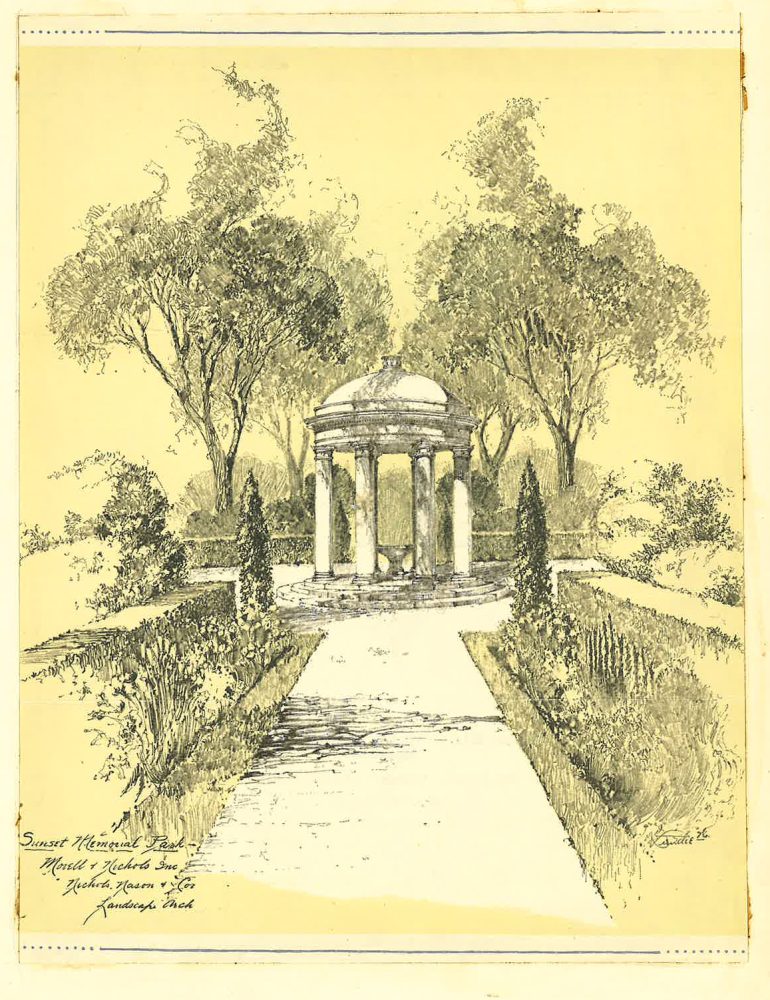
Rendering of Covered Fountain in Sunset Memorial Park. From the portfolio of Arthur Nichols, c. 1935
With the largest Sherlock Holmes collection in the world, the Elmer L. Andersen library is brimming with a new mystery almost everyday (we often say that if anywhere is haunted, it would be here). However, the visitors of the past can often yield fascinating stories of worlds before us. History matters, and to me, the little pieces of history that exist in our own backyard can sometimes be the most interesting, from Lake Minnetonka estates to cemeteries that at first glance seem to be secret meat-packing schemes.
Author bio
Ivy Ann Forrest Orlando is a Landscape Architecture student at the University of Minnesota: Twin Cities. Expected to graduate in Spring 2027 with a Bachelor of Landscape Architecture and Sustainability Studies minor, Ivy started working at the Northwest Architectural Archives in February 2024, and has worked on various collections within the caverns, including Significant Architects series from the Minneapolis Plan Vault collection, and currently, Morrell and Nichols. They believe studying the past helps us understand the present and guide the future and hopes to continue work at the intersection of ecology, design and public history throughout their career.